Why Aerobic System Troubleshooting Garden Ridge TX Homeowners Need This Guide
When your advanced wastewater treatment system acts up, aerobic system troubleshooting garden ridge tx becomes crucial. A malfunction can quickly escalate from a minor issue to a major headache for homeowners.
Quick Troubleshooting Steps for Garden Ridge Homeowners:
- Check the control panel for flashing lights or alarms.
- Ensure power is on by verifying all circuit breakers.
- Listen for the aerator to confirm it's running.
- Inspect spray heads for clogs or damage.
- Check for odors, which indicate oxygen problems.
- Look for pooling water, a sign of system failure.
Unlike traditional septic systems that rely on anaerobic bacteria, aerobic systems use oxygen-loving bacteria to treat up to 90% of wastewater. This advanced treatment involves more complex components that can fail.
Your aerobic system has electrical parts, pumps, and aerators that need a constant oxygen supply to keep beneficial bacteria alive. Garden Ridge's clay soil and heavy rainfall can add stress, making poor drainage and system overloading common local challenges.
Many issues have simple solutions you can try before calling a professional. However, knowing when to call for help can save you thousands in repairs and prevent environmental contamination.
Understanding Your Aerobic System's Key Components
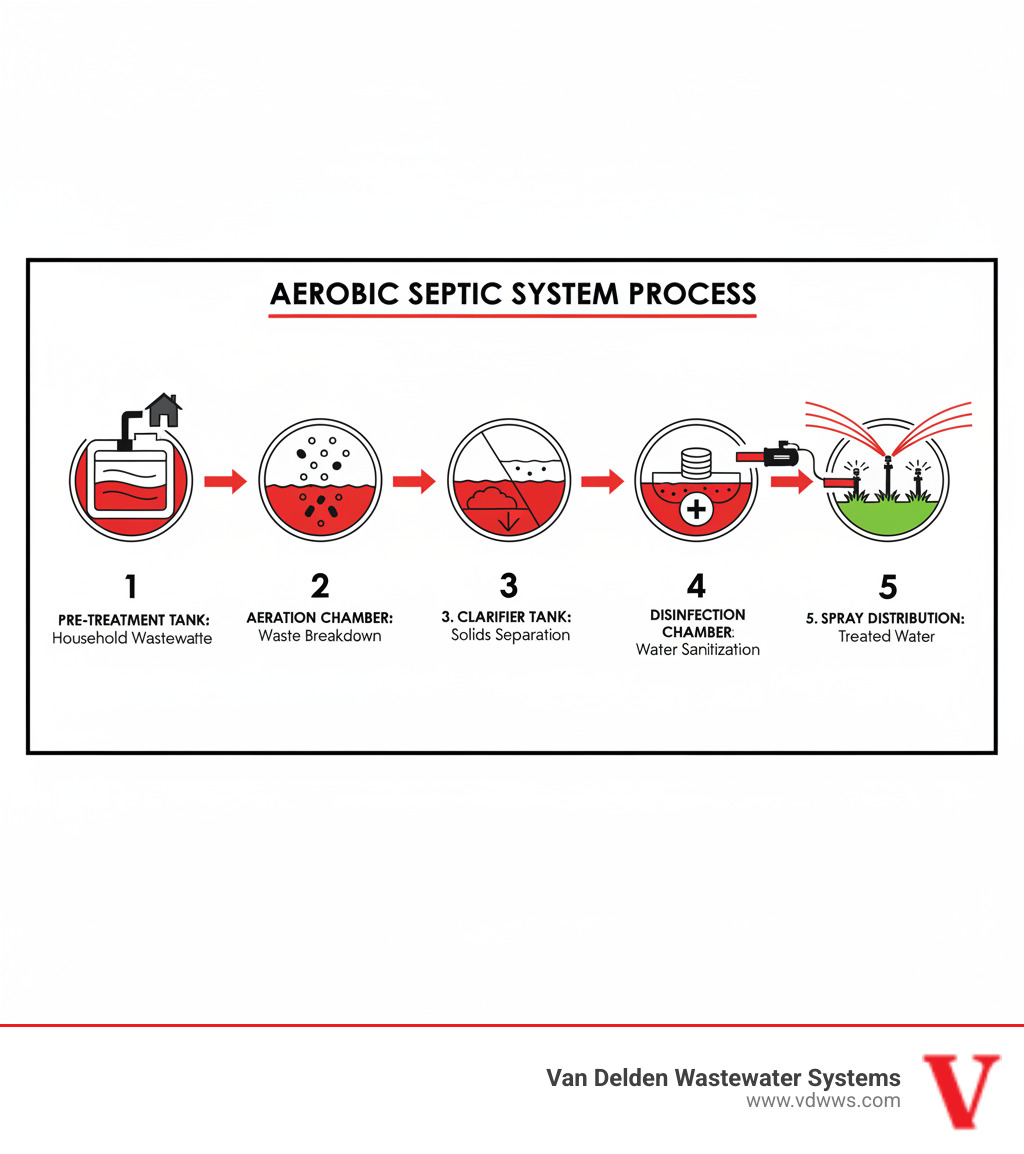
Understanding your system's components is key to effective aerobic system troubleshooting garden ridge tx. Your system is a miniature wastewater treatment plant with several interconnected parts working in stages.
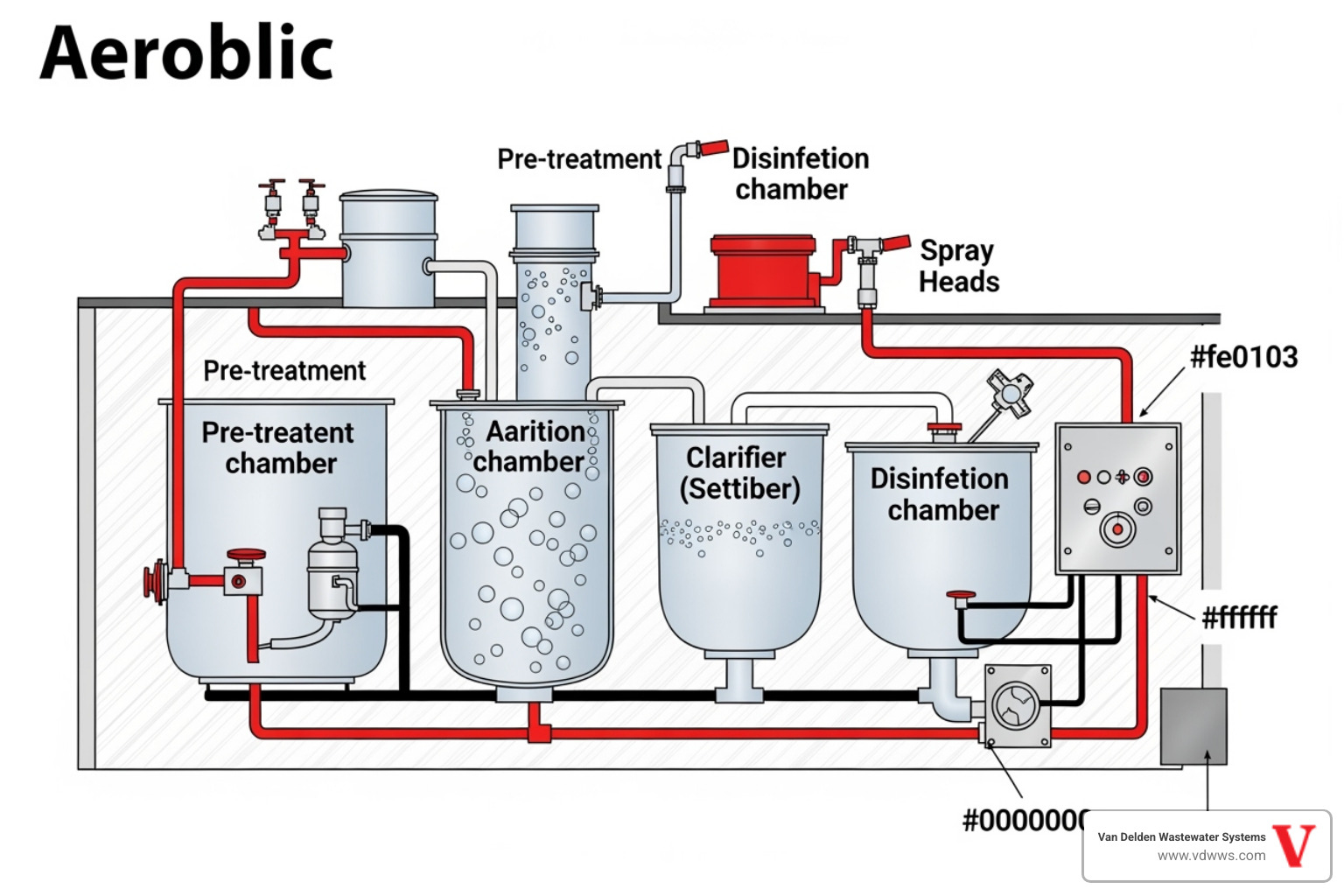
It starts with the pre-treatment tank, where heavy solids settle. The wastewater then moves to the aeration chamber, where oxygen-loving bacteria break down waste. In the clarifier, remaining particles settle out before the water enters the disinfection chamber to be sanitized with chlorine. Finally, the effluent pump pushes the treated water to your spray heads or drip lines.
The aerator provides constant oxygen, and the control panel manages the entire process. A malfunction in any one of these parts can disrupt the whole system. For a deeper look at how these systems work, see our guide on Aerobic Systems Decoded.
The Brains: Control Panel and Alarms
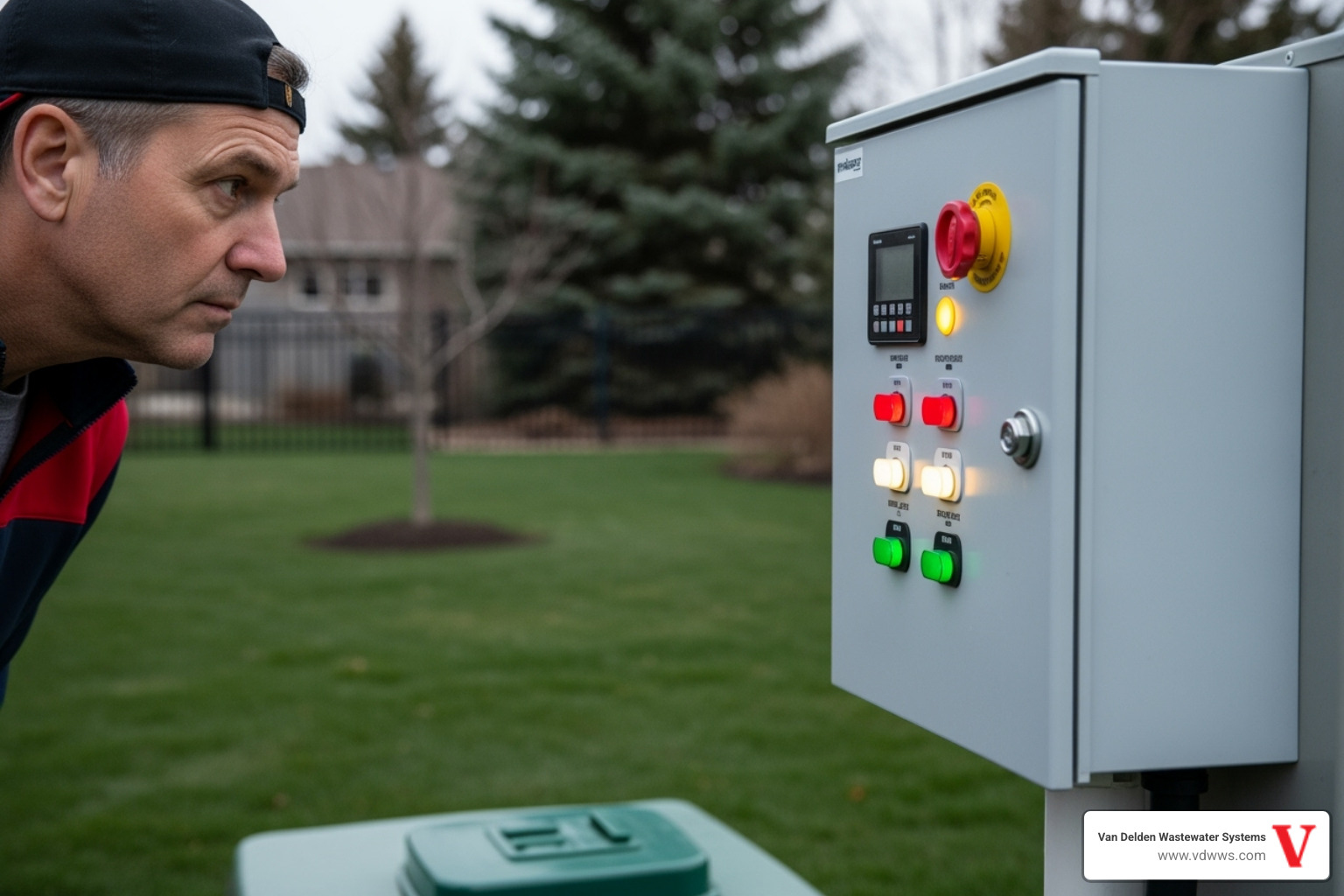
Your control panel is the system's command center, managing pump operations and providing early warnings. It uses two main alarm types:
- The high water alarm (usually red) indicates high water levels in the tanks, often due to a failed pump, a clog, or excessive water use.
- The compressor alarm (often amber) signals a problem with the aerator. This is urgent, as the beneficial bacteria will begin to die within hours without oxygen, causing odors.
Most panels have a mute switch to silence the alarm while you investigate and circuit breakers for different components. A tripped breaker is a common and easily fixed cause of system failure.
The Heart: Aerator and Pumps
The aerator is the heart of your system, pumping air into the aeration chamber so aerobic bacteria can thrive. These bacteria need a 24/7 oxygen supply to work efficiently. If the aerator fails, they are replaced by smelly anaerobic bacteria, and your yard will smell like a sewer.
Your effluent pump plays a crucial supporting role, moving treated water from the disinfection chamber to the dispersal area. A failed pump causes water to back up, triggering alarms and creating soggy spots in your yard. Some systems also have a sump pump to aid water circulation.
The Lungs: Dispersal System
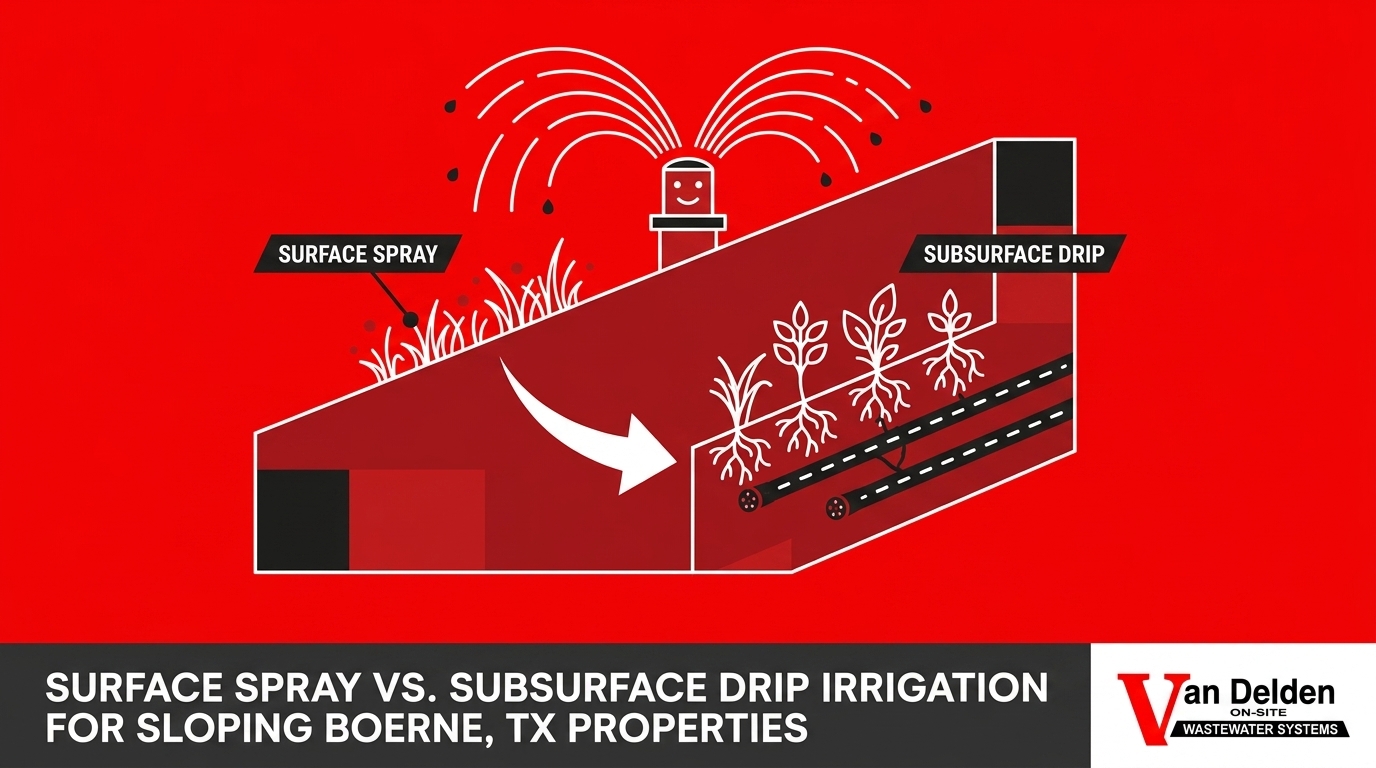
Your dispersal system safely releases treated effluent back into the environment. Garden Ridge homeowners typically have one of two options:
Problems like clogged spray heads or damaged drip lines can cause pooling water and soggy spots, signaling that the system's final stage needs attention.
A Step-by-Step Guide to Aerobic System Troubleshooting in Garden Ridge, TX
Septic issues are stressful, but many common problems have simple solutions. This guide covers aerobic system troubleshooting garden ridge tx homeowners can perform safely, saving time and money.
Safety First: Septic systems involve electricity, wastewater, and potentially hazardous gases. If you feel uncertain about any step, stop and call a professional. Start with the simplest explanations first, as a tripped breaker is often the culprit. For a list of common issues, see our guide to Common Aerobic System Problems.
Troubleshooting Alarms: A Guide for Aerobic System Troubleshooting in Garden Ridge, TX
An alarm is your system's way of asking for help before a problem becomes a disaster. Your system typically has two main alarms: the red alarm (High Water Alarm), which means water levels are too high, and the amber/yellow alarm (Compressor Alarm), which signals a problem with the aerator.
When an alarm sounds, head to your control panel. Mute the alarm by toggling the appropriate switch to the middle position. This silences the noise but keeps the warning light on while you investigate.
Tackling High Water Alarms (Red Light)
Check if your spray heads are spraying. If not, your pump may not be working. Find the circuit breaker labeled "PUMP" or "20AMP" in your control panel and reset it. If the pump kicks on, reduce household water use immediately (laundry, long showers) until the water level drops. Once the system normalizes, switch the HWA toggle back to "RUN."
Addressing Compressor Alarms (Amber Light)
Listen for the steady hum of the compressor. If it's silent, try resetting its breaker in the control panel. Also, check the air tubing running from the compressor to the tanks for any disconnections, cracks, or damage. A simple reattachment may solve the problem. If the compressor starts running, switch the COMP toggle back to "RUN."
If these steps don't resolve the alarm, it's time for professional help. Our technicians specialize in Aerobic System Troubleshooting and can diagnose complex issues quickly.
Tackling Odors and Wet Spots: Aerobic System Troubleshooting in Garden Ridge, TX
A properly functioning aerobic system should not smell. A sewage or rotten egg odor almost always points to oxygen starvation in your aeration chamber. When the aerator stops working, smelly anaerobic bacteria take over.
Solving the Smell Mystery
First, check your electrical panel to ensure all breakers are on and listen for the aerator. If the system has been without power, it may take several days for odors to disappear after it's running again. System overload from heavy rain or houseguests can also cause odors. If you smell sewage inside your home, it's likely a plumbing issue like a dry sink trap. For more on odors, read Why Does My Aerobic System Smell?.
Dealing with Pooling Water
Soggy spots or standing water near your dispersal field are red flags. This means water isn't dispersing correctly. Broken or clogged spray heads are common culprits; inspect them for damage or debris. Our guide on how to Troubleshoot Aerobic System Sprinklers can help.
Effluent pump failure can also cause backups and pooling, typically triggering the high water alarm. Garden Ridge's clay soil can worsen this issue during wet periods. If you see pooling water, immediately reduce water use and call for a professional inspection to prevent environmental contamination and costly repairs.
Preventing Problems: Best Practices for Garden Ridge Homeowners
Proactive maintenance is the best way to avoid needing aerobic system troubleshooting garden ridge tx services. Smart habits can prevent major headaches and ensure your system runs reliably for years.
Your system's beneficial bacteria need consistent conditions to work effectively. Recognizing Signs Your Aerobic System Needs Maintenance early can prevent small issues from becoming expensive repairs.
Adapting to the Local Climate and Soil
Garden Ridge's environment affects your system. Heavy rainfall can saturate the dispersal field, while the area's clay soil slows water absorption, which can lead to pooling effluent. System overloading is a greater risk when you combine clay soil, heavy rain, and high water use. During rainy periods, spread out water-intensive activities like laundry.
Smart runoff management is also key. Ensure gutters direct rainwater away from your septic tanks and control panel to prevent infiltration or electrical issues. For more local guidance, visit our Garden Ridge TX service page.
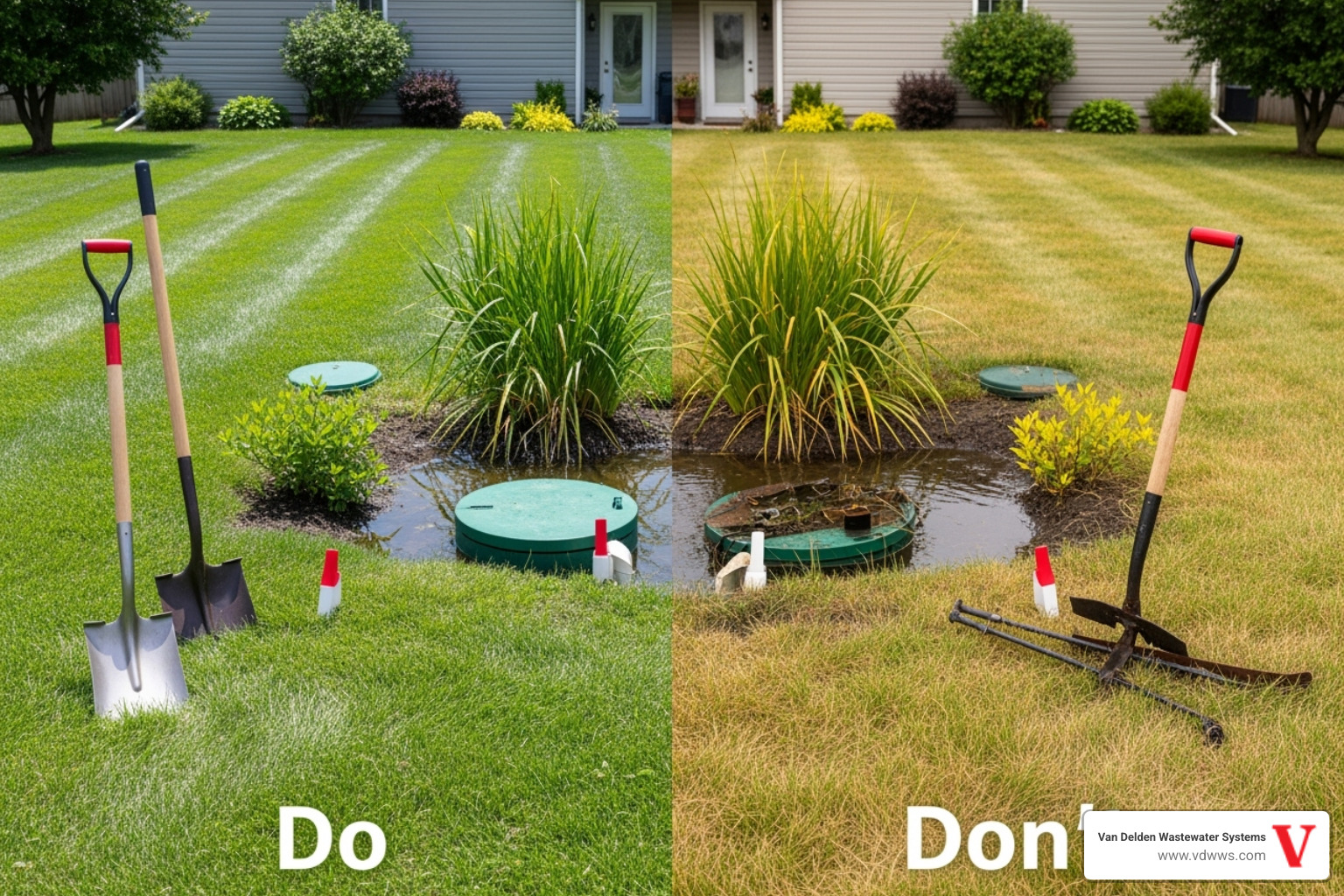
Homeowner Do's and Don'ts
Maintaining a healthy system requires attention to what goes down your drains and how you use water.
- DO conserve water. Spread out laundry loads and fix leaky faucets to avoid overwhelming the system.
- DO use proper disinfectants. Use only septic-approved chlorine tablets, never pool chemicals, and refill them regularly.
- DO protect your dispersal area. Keep heavy vehicles and equipment off the spray field to prevent soil compaction. Avoid planting trees with invasive roots near system components.
- DO watch for fire ants. They often build colonies near warm electrical components and can cause serious damage. Treat infestations immediately.
- DON'T flush anything but waste and toilet paper. So-called "flushable" wipes, feminine products, and cotton swabs cause clogs.
- DON'T pour grease or cooking oils down the drain. They solidify and create blockages.
- DON'T use harsh chemicals. Paint, solvents, or excessive bleach can kill the beneficial bacteria your system needs.
- DON'T overuse garbage disposals. They significantly increase the solid waste entering your system, requiring more frequent pumping. Use it sparingly or compost food scraps instead.
- NEVER ignore alarms. Muting an alarm without addressing the underlying problem will only make it worse.
Following these guidelines invests in your system's longevity. For more tips, see this discussion: What do I need to know about Aerobic Septic Systems?
When to Call a Professional vs. DIY Fixes
While the DIY spirit is admirable, aerobic septic systems are not typical weekend projects. They involve electrical hazards, complex parts, and health risks, making some aerobic system troubleshooting garden ridge tx tasks unsafe for homeowners.
Safe DIY Troubleshooting Steps:
- Resetting tripped circuit breakers in the control panel.
- Muting alarms (but not ignoring the warning light).
- Gently cleaning debris from clogged spray heads.
- Confirming the system has power.
When to Call a Professional Immediately:
- Sewage backup in your home is a health emergency. Stop all water use and call us.
- Persistent alarms that return after a reset indicate a deeper problem.
- Foul odors that don't go away after a few days suggest a biological imbalance.
- Pooling water that won't drain points to pump failure or major clogs.
- Any electrical issues beyond a simple breaker reset require a licensed professional.
Aerobic systems are complex. What seems like a simple problem can be a symptom of a larger issue. Our trained technicians specialize exclusively in wastewater solutions, allowing them to provide a thorough diagnosis and quality repair that solves the root cause.
Attempting repairs beyond your skill level often leads to more expensive problems. When in doubt, it's safer and more cost-effective to call the pros. Your family's health and your system's longevity are worth it. Find professional maintenance providers on our Aerobic System Maintenance Providers Near Me page.
Frequently Asked Questions about Aerobic Systems
Here are answers to common questions from Garden Ridge homeowners. Understanding these points will help you with aerobic system troubleshooting garden ridge tx and general maintenance.
What's the difference between an aerobic and anaerobic system?
Aerobic systems are miniature wastewater treatment plants, while conventional (anaerobic) systems are simpler holding tanks. The key difference is oxygen.
| Feature | Aerobic System | Anaerobic (Conventional) System |
|---|
| Oxygen Use | Actively introduces oxygen | Naturally occurs without oxygen |
| Treatment Efficiency | Treats up to 90% of waste | Treats only 20-30% of waste |
| Components | Pre-treatment tank, aeration chamber, clarifier, disinfection chamber, pumps, control panel | Septic tank and drainfield |
| Maintenance Needs | More complex - electrical checks, aerator care, regular pumping | Simpler - mainly pumping and drainfield protection |
Aerobic systems pump air into the treatment process, allowing highly efficient bacteria to thrive. This produces cleaner effluent, which is ideal for areas with challenging soil like Garden Ridge. However, the mechanical parts (aerators, pumps) mean there is more that can go wrong.
How often does my aerobic system need to be pumped?
It depends, but most Garden Ridge homeowners need pumping every 3 to 5 years. Factors that influence this include:
- Household size: More people means more waste and more frequent pumping.
- Water usage: High water use can affect treatment efficiency.
- Garbage disposals: These dramatically increase the solid waste in your tank and can significantly shorten the time between pump-outs.
The best approach is to schedule a professional inspection every three years. A technician can measure sludge levels and recommend pumping when necessary, preventing solids from overflowing into other chambers and causing damage.
Can I use a garbage disposal with my aerobic system?
Technically yes, but we strongly recommend against it. Garbage disposals add a tremendous amount of solid waste, fats, and oils to your system, which can overwhelm the bacteria and disrupt the treatment process.
This strain means you'll need much more frequent pumping, increasing your maintenance expenses. We've seen homeowners go from needing pumping every 4-5 years to annually after installing a garbage disposal.
Our professional recommendation is to skip the garbage disposal. Scrape food scraps into the trash or a compost bin. Your system will perform better and require less frequent service.
Your Partner in Septic Health
Dealing with septic trouble can be overwhelming, but this guide equips you to handle common aerobic system troubleshooting garden ridge tx situations.
Key takeaways include listening to your system's alarms, knowing basic fixes like resetting breakers, and recognizing your limits with complex repairs. Most importantly, never ignore a problem, as early intervention saves money and stress. Regular maintenance, including water conservation and proper waste disposal, is your system's best defense.
At Van Delden Wastewater Systems, we've been helping families like yours since 1937. We are your neighbors, dedicated to keeping your system running smoothly. Our professional technicians are honest, background-checked, and non-commissioned, meaning they focus on educating you and providing real solutions, not upselling services.
We believe in transparency, providing detailed service forms and photo documentation of every visit so you always know what we did and why. No surprises, just straight talk about your system's health.
Your aerobic system is a sophisticated piece of technology that deserves expert care. When you're ready for professional service, we're here with the experience and integrity your family deserves.
For expert diagnosis and service on your aerobic system, trust the professionals who truly understand wastewater. Schedule your aerobic system service today.